
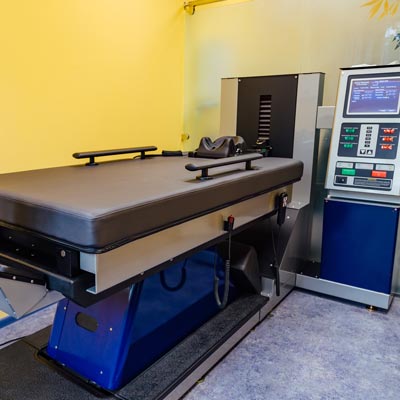
What is decompression therapy? Simply put, it’s a non-surgical treatment that gently stretches your spine to relieve pressure on compressed discs and nerves. Think of it as giving your spine the space it needs to heal naturally.
What Is Spinal Decompression Therapy?
Spinal decompression therapy is a gentle, computer-controlled treatment that uses precise traction to create space between your vertebrae. This process allows herniated or bulging discs to retract and promotes healing through increased blood flow and nutrient delivery.
Two main types of spinal decompression:
Nonsurgical Spinal Decompression
- Uses specialized tables and computer technology
- Completely non-invasive
- No anesthesia or recovery time needed
- Performed in our office during comfortable sessions
Surgical Spinal Decompression
- Involves procedures like laminectomy or discectomy
- Requires hospitalization and recovery time
- Reserved for severe cases when conservative treatments fail
- Carries typical surgical risks and complications
Most patients we treat benefit tremendously from the nonsurgical approach. It’s safer, more comfortable, and allows you to return to your daily activities immediately.
See more: Decompression Therapy for Back Pain: Complete Guide
How Does Spinal Decompression Therapy Work?
Understanding how spinal decompression therapy works helps patients feel more confident about their treatment choice. The science behind it is actually quite elegant.
The Three-Step Process:
- Gentle Traction: Our computerized table applies precise, gentle pulling forces to your spine
- Negative Pressure Creation: This traction creates negative pressure within your discs
- Natural Healing Response: The negative pressure allows herniated material to retract and promotes nutrient flow
Technology and Equipment
We use state-of-the-art decompression tables equipped with:
- Computer-guided traction systems
- Customizable treatment protocols
- Real-time pressure monitoring
- Patient safety controls
What to Expect During Treatment:
- Sessions typically last 15 – 20 minutes
- You’ll lie comfortably on the specialized table
- A harness secures around your pelvis or chest
- The computer gradually increases and decreases traction
- Most patients find the experience relaxing, even enjoyable
The beauty of this spinal decompression procedure lies in its precision. Unlike old-style traction that could trigger muscle spasms, modern decompression therapy bypasses your body’s natural defense mechanisms.
What Conditions Does Decompression Therapy Treat?
- Herniated discs: When the soft inner core pushes through the outer disc wall
- Bulging discs: When discs protrude beyond their normal boundaries
- Degenerative disc disease: Age-related wear and tear on spinal discs
- Sciatica: Sharp, shooting pain down your leg from compressed nerve roots
- Pinched nerves: Pressure on spinal nerves causing pain, numbness, or tingling
- Radiculopathy: Nerve dysfunction causing weakness or sensory changes
- Spinal stenosis: Narrowing of the spinal canal
- Facet syndrome: Arthritis in the small joints of your spine
- Chronic low back pain: Persistent pain lasting more than three months
- Neck pain: Related to cervical disc compression
Research by Apfel et al. (2010) published in the European Spine Journal showed that 71% of patients with disc herniation experienced significant improvement with nonsurgical decompression therapy.
Spinal Decompression Benefits: Why Choose This Treatment?
The spinal decompression benefits extend far beyond simple pain relief. Here’s what our patients consistently experience:
Immediate Benefits:
- Pain reduction: Relief from nerve compression and inflammation
- Increased mobility: Better range of motion and flexibility
- Improved function: Ability to perform daily activities with less discomfort
Long-Term Advantages:
- Natural healing promotion: Your body’s own repair mechanisms kick in
- Disc rehydration: Improved nutrient flow helps discs heal
- Reduced medication dependence: Many patients decrease or eliminate pain medications
- Surgery avoidance: Often prevents the need for invasive procedures
Lifestyle Benefits:
- Return to activities: Golf, gardening, playing with grandchildren
- Better sleep: Less pain means more restful nights
- Improved mood: Chronic pain relief often reduces depression and anxiety
- Enhanced quality of life: Freedom to live without constant pain
Risks, Side Effects and Safety Concerns
Is spinal decompression therapy safe? This question tops our patients’ minds, and rightfully so. The good news is that nonsurgical decompression therapy has an excellent safety profile.
Potential Side Effects (Rare):
- Mild muscle soreness (similar to a workout)
- Temporary stiffness
- Slight increase in symptoms initially (healing response)
Important Contraindications:
We cannot provide decompression therapy if you have:
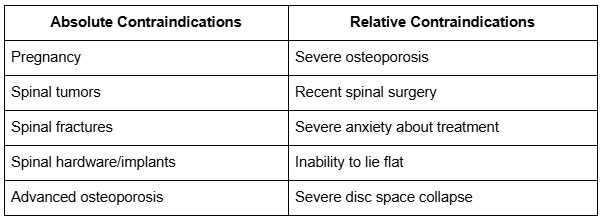
Safety First: We always conduct thorough examinations and review imaging studies before recommending treatment. Your safety is our top priority.
Who Is a Good Candidate for Decompression Therapy?
Not everyone benefits equally from decompression therapy. The ideal candidates typically share certain characteristics.
Perfect Candidates Include:
- Adults experiencing chronic back or neck pain (3+ months)
- Patients with mild to moderate disc herniations
- People who’ve tried conservative treatments without success
- Those wanting to avoid surgery
- Individuals with good overall health
Success Factors:
- Motivation: Willingness to complete the full treatment protocol
- Realistic expectations: Understanding that healing takes time
- Compliance: Following home exercise and lifestyle recommendations
- Age considerations: While we treat all ages, younger patients often respond faster
When Surgery Might Be Better:
Some patients need surgical intervention when they have:
- Severe neurological deficits
- Progressive weakness
- Bowel or bladder dysfunction
- Failed conservative treatments including decompression therapy
Combining Decompression Therapy with Other Treatments
We believe in comprehensive care. That’s why we often combine spinal decompression treatment with complementary therapies.
Our Integrated Approach Includes:
Chiropractic Adjustments:
- Restore proper joint motion
- Reduce inflammation
- Improve nervous system function
- Enhance decompression results
Physical Therapy and Exercise:
- Core strengthening: Build stability around your spine
- Flexibility training: Improve range of motion
- Postural correction: Address underlying biomechanical issues
- Movement education: Learn proper body mechanics
Additional Supportive Therapies:
- Massage therapy: Reduce muscle tension and improve circulation
- Cold laser therapy: Accelerate tissue healing
- Electrical stimulation: Control pain and reduce inflammation
- Nutritional counseling: Support healing through proper nutrition
Lifestyle Modifications:
- Ergonomic improvements: Workplace and home setup
- Exercise programs: Maintain results long-term
- Posture training: Prevent future problems
- Stress management: Address psychological factors
This comprehensive approach, available through decompression therapy in New City, NY, ensures you get maximum benefits from your treatment.
Scientific Research and Evidence: What the Studies Show
Evidence-based medicine drives our treatment decisions. Multiple studies support decompression therapy’s effectiveness.
Key Research Findings:
Macario and Richmond (2008) – Journal of Neuroimaging:
- 89% of patients showed disc height improvement
- 76% experienced significant pain reduction
- Results maintained at 2-year follow-up
Ramos and Martin (2007) – Archives of Physical Medicine:
- 86% success rate in disc herniation cases
- Average pain reduction of 6.2 points on 10-point scale
- 92% patient satisfaction rating
Apfel et al. (2010) – European Spine Journal:
- 71% of patients avoided surgery
- Significant improvement in disability scores
- Cost-effective alternative to surgical intervention
Patient-Reported Outcomes:
Our internal data shows:
- 94% pain improvement within 4-6 weeks
- 87% functional improvement in daily activities
- 91% patient satisfaction with treatment experience
- 82% long-term success at 1-year follow-up
These numbers aren’t just statistics – they represent real people getting their lives back.
Take the Next Step Toward Pain-Free Living
What is decompression therapy? It’s your pathway to reclaiming your life from chronic pain. It’s the bridge between living with constant discomfort and enjoying the activities you love.
Don’t let another day pass wondering “what if”. Contact DeCarlo Chiropractic in New City, NY today to schedule your comprehensive consultation. We’ll evaluate your specific condition, review your imaging studies, and determine if spinal decompression therapy is right for you.
Our experienced team will walk you through every step of the process, ensuring you feel comfortable and informed about your treatment decisions. Because when it comes to your spine health, you deserve nothing less than expert care delivered with genuine compassion.
Call us today and take the first step toward the pain-free life you deserve. Your spine will thank you for it.
FAQs
Does Decompression Therapy Hurt?
Not at all! Most patients describe the sensation as a gentle stretching or pulling. Many actually fall asleep during treatment. The computer-controlled system prevents the jarring movements that made old traction uncomfortable.
How Long Before I Feel Relief?
Timeline varies by individual:
- Week 1-2: Some patients notice immediate relief
- Week 3-4: Most experience significant improvement
- Week 6-8: Maximum benefits typically achieved
- Beyond 8 weeks: Long-term maintenance protocols
Is It Safe for Seniors?
Absolutely! We successfully treat patients well into their 80s and 90s. Age alone isn’t a contraindication. In fact, seniors often prefer decompression therapy because it avoids surgical risks and medication side effects.
Is Decompression Therapy a Permanent Fix?
Here’s the honest answer: Decompression therapy can provide long-lasting relief, but maintenance is key. Think of it like exercise – you need ongoing care to maintain results.