
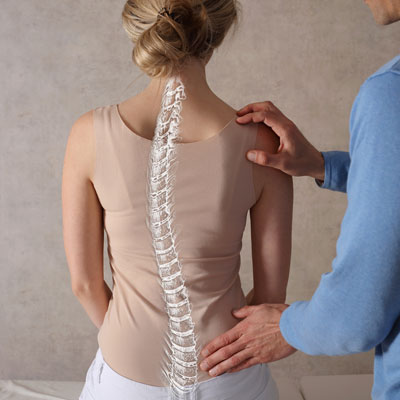
If you have scoliosis and are considering chiropractic care, the most important question is not whether a chiropractor can simply make your spine straight. It is what chiropractic treatment may realistically help with and whether it is appropriate for your condition.
A scoliosis chiropractor may help some people manage back pain, stiffness, limited mobility, and postural or movement related discomfort. However, improving these symptoms is different from permanently correcting a structural scoliosis curve.
At DeCarlo Chiropractic in New City, NY, we evaluate each patient individually to understand their symptoms, posture, and spinal function before determining whether corrective chiropractic care may be appropriate.
How can a scoliosis chiropractor help?
1. Manage back pain and stiffness
Changes in spinal curvature can affect how the joints and surrounding muscles work together. For some people, this may contribute to areas of tension, stiffness, or discomfort.
Chiropractic adjustments may be used to address restricted joint movement and support more comfortable musculoskeletal function. Treatment should be based on examination findings rather than assuming that every painful area is caused directly by scoliosis.
2. Improve spinal mobility and daily function
Scoliosis may make bending, turning, standing, exercising, or other activities uncomfortable for some people.
When restricted movement is present, chiropractic care may focus on improving spinal mobility and helping the patient move more comfortably. Better movement and function can be meaningful treatment goals even when the structural scoliosis curve itself does not significantly change.
3. Address posture and movement patterns
Scoliosis may create differences in shoulder height, hip position, or the way the trunk is held. These changes can influence how a person stands and moves.
Corrective chiropractic care may consider posture and movement patterns as part of the overall treatment plan. However, scoliosis is different from ordinary signs of poor posture. A structural scoliosis curve should not be treated as simply a bad posture habit.
Can a chiropractor fix or straighten scoliosis?
This is one of the most important questions to ask before starting treatment.
A chiropractor should not guarantee that adjustments will completely fix scoliosis, reverse the condition, or make every structural curve straight.
There is a difference between improving symptoms and function and changing the structural curvature of the spine.
A person may experience less pain or stiffness, better mobility, and greater comfort during daily activities without a major change in the scoliosis curve or Cobb angle. These can still be valuable outcomes, especially for adults who have lived with scoliosis for many years.
Can chiropractic stop scoliosis from getting worse?
Current evidence does not support promising that chiropractic treatment alone can reliably stop scoliosis from progressing or permanently reduce the Cobb angle.
Scoliosis management depends on several factors, including the degree of the curve, age, skeletal maturity, symptoms, and the likelihood of progression. Depending on the individual case, care may involve observation, bracing, rehabilitation, or surgery.
Chiropractic may be included as part of a conservative care plan for an appropriate patient, particularly when addressing mobility, posture, or related discomfort. However, it should not replace appropriate monitoring or specialist care when those are needed.
What does scoliosis chiropractic treatment involve?
There is no single chiropractic treatment that is appropriate for every person with scoliosis. Care should begin with an evaluation and be adapted to the patient’s symptoms and spinal findings.
Step 1. Evaluate the spine, posture, and symptoms
At DeCarlo Chiropractic, we begin by reviewing the patient’s health history and symptoms and examining spinal function and posture.
When appropriate, evaluation may also include a chiropractic and neurological examination, digital X-rays, and postural analysis. X-ray imaging can help evaluate the spinal curvature, while the Cobb angle is commonly used to describe the degree of a scoliosis curve.
The purpose of this assessment is to understand the individual condition before recommending care.
Step 2. Use chiropractic adjustments when appropriate
Chiropractic adjustments use controlled force to address areas of restricted joint movement and support musculoskeletal function.
With scoliosis, an adjustment should not be thought of as simply pushing a vertebra back into place until the spine becomes straight. Structural scoliosis is more complex than a single joint being out of position.
The techniques used should therefore reflect the patient’s symptoms, examination findings, age, and overall spinal condition.
Step 3. Incorporate corrective chiropractic care
DeCarlo Chiropractic uses Chiropractic BioPhysics® (CBP), as part of our corrective chiropractic approach.
CBP considers spinal alignment and posture as part of assessment and care. Digital X-rays and postural analysis may be used when appropriate to better understand the patient’s spinal alignment and guide an individualized treatment plan.
Posture, movement, and daily habits may also be considered when they contribute to discomfort or limited function.
Who may benefit from seeing a scoliosis chiropractor?
There is no single Cobb angle that automatically determines whether someone is a good candidate for chiropractic treatment.
Seeing a scoliosis chiropractor may be worth considering when scoliosis is accompanied by:
- Back pain or stiffness
- Muscle tension
- Restricted spinal mobility
- Postural or movement related discomfort
- Difficulty with certain everyday activities
- A desire for conservative symptom management
An evaluation is important because having scoliosis does not mean that every episode of back pain is caused by the curve.
When chiropractic may not be enough
Some cases require additional medical evaluation or a different treatment approach.
This may include a rapidly progressing scoliosis curve, significant neurological symptoms, or cases in which bracing or surgical evaluation is indicated. Conditions such as severe osteoporosis, spinal fracture, infection, or cancer affecting the spine may also change whether spinal manipulation is appropriate.
A responsible treatment plan should recognize when chiropractic care can play a role and when referral or co-management with another healthcare professional is needed.
Does scoliosis chiropractic care differ for adults and adolescents?
Age matters because treatment goals and the risk of curve progression are not the same for everyone.
For adults with scoliosis, chiropractic care may focus primarily on back pain, stiffness, mobility, posture, and daily function. Changes in the discs and joints that occur with age can also contribute to symptoms, so the scoliosis curve should not automatically be assumed to be the only cause of pain.
For children and adolescents, growth and skeletal maturity become important considerations. A curve may change while the spine is still developing. Younger patients with progressing scoliosis may require medical monitoring, bracing, or specialist treatment. Chiropractic care should not replace these approaches when they are clinically indicated.
How do you choose a chiropractor for scoliosis?
Not every person with scoliosis needs the same approach, so the evaluation process matters when choosing a chiropractor.
When choosing a chiropractor for scoliosis, look for a licensed Doctor of Chiropractic (DC) who:
- Evaluates your condition before recommending treatment
- Explains realistic goals and limitations
- Bases care on your symptoms and examination findings
- Does not guarantee a complete reversal of scoliosis
- Recognizes when referral or additional medical care is appropriate
At DeCarlo Chiropractic, Dr. Chris DeCarlo and Dr. Lauren Mykalcio earned their Doctor of Chiropractic degree from Life University and has postgraduate training in Chiropractic BioPhysics®. Our approach uses individual examination findings and, when appropriate, digital imaging and postural analysis to help guide corrective care.
Frequently asked questions about scoliosis chiropractors
Is chiropractic safe for scoliosis?
Whether chiropractic care is appropriate depends on the person’s health, symptoms, age, and spinal condition. An evaluation should be completed before treatment so the chiropractor can identify relevant risks and determine whether care is suitable.
Can adults with scoliosis see a chiropractor?
Yes. Adults with scoliosis may consider chiropractic care for back pain, stiffness, restricted mobility, or related musculoskeletal problems. Treatment goals often focus on improving comfort and function rather than completely straightening a long standing structural curve.
Do you need an X-ray before scoliosis chiropractic treatment?
Not everyone who sees a chiropractor automatically needs a new X-ray. Existing imaging may be reviewed, or X-rays may be recommended when clinically appropriate to better evaluate the spine and scoliosis curve.
How often should you see a chiropractor for scoliosis?
There is no standard treatment schedule for everyone with scoliosis. Visit frequency should depend on examination findings, symptoms, treatment goals, and how the patient responds to care. The same factors are important when determining how often you should go to the chiropractor.
Talk to a scoliosis chiropractor in New City, NY
Scoliosis does not affect everyone in the same way, and chiropractic treatment should not take a one size fits all approach. For some people, care may focus on reducing stiffness, improving mobility, and making everyday movement more comfortable while maintaining realistic expectations about the structural curve.
At DeCarlo Chiropractic in New City, NY, we use individualized evaluation and corrective chiropractic approaches, including Chiropractic BioPhysics®, to determine whether care is appropriate for each patient.
If scoliosis is affecting how you feel or move, contact us to discuss your symptoms and the next step.