
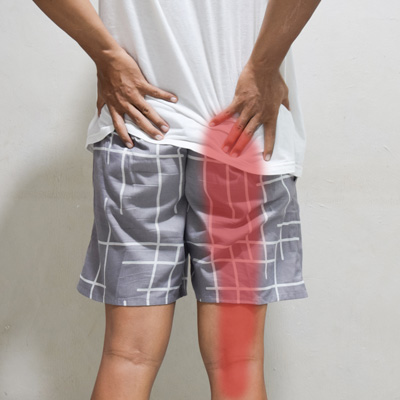
Shooting pain down your leg? Numbness in your foot? That electric shock when you bend forward? That’s sciatica, and you’re probably wondering: does decompression help sciatica?
At DeCarlo Chiropractic, we’ve used non-surgical spinal decompression combined with structural correction to help hundreds of patients escape sciatic pain. This isn’t symptom masking – it’s fixing the mechanical problem causing your pain.
The Root of Sciatica: Why Compression Happens
Disc Herniation & Bulges: The Main Culprit
Your spinal discs are shock absorbers between vertebrae. When a disc herniates or bulges, the inner gel-like material pushes outward and presses on the sciatic nerve root.
Think of a jelly donut squeezed too hard – the filling pushes through the weak spot. In your lower back, that creates:
- Sharp pain radiating from lower back through buttock and down leg
- Numbness, tingling, or weakness
- Pain that worsens with sitting or bending
Common disc-related causes:
- L4-L5 disc herniation
- L5-S1 disc bulge
- Degenerative disc disease
- Acute disc injury from lifting/twisting
Other Structural Causes
- Spinal stenosis: Narrowing of the spinal canal
- Spondylolisthesis: Vertebral slippage
Different mechanisms, same result – something presses on your sciatic nerve.
See more: What is Sciatica?
How Decompression Relieves Sciatic Pain
Spinal decompression uses a specialized table to gently stretch your spine with precise, computer-controlled force. This isn’t hanging from a bar – it’s targeted treatment for the specific level causing symptoms.
Creating Negative Pressure: The “Vacuum Effect”
Decompression creates negative pressure within the disc space. This vacuum effect draws herniated material back toward the disc center, away from the nerve.
Apfel et al. (2010) in BMC Musculoskeletal Disorders showed that decompression created measurable negative intradiscal pressure, significantly reducing pain and disability in herniation patients.
What happens during treatment:
- Gentle traction applied to specific spinal segments
- Negative pressure develops in disc space
- Herniated material retracts from nerve root
- Pressure relief on sciatic nerve
- Pain signals decrease
Nutrient Influx: Promoting Natural Healing
Decompression does more than create temporary space. The negative pressure draws oxygen, water, and nutrients into the disc.
Here’s the problem: Spinal discs lack their own blood supply. They rely on diffusion for nutrients. When compressed and degenerated, this process becomes inefficient.
Decompression creates a pumping mechanism forcing healing nutrients into damaged disc tissue – actual repair, not just symptom relief.
Why Decompression + CBP Is Essential
Beyond Temporary Relief: Addressing the Root Cause
Here’s what most patients miss: decompression alone isn’t enough.
We’ve seen people get temporary relief only to have symptoms return months later. Why? Decompression without structural correction is like inflating a tire without fixing the leak.
Stretching the spine creates temporary space, but if the underlying structure remains misaligned, the disc continues experiencing abnormal stress – often what caused herniation initially.
Corrective Chiropractic Care: Long-Term Solutions
Chiropractic BioPhysics (CBP) restores the spine’s natural curves and proper alignment. When structurally sound, discs experience normal, evenly distributed pressure instead of concentrated stress.
The logic:
- Decompression pulls disc material back in
- Structural correction ensures it stays there
- Proper alignment prevents re-herniation
Our integrated approach:
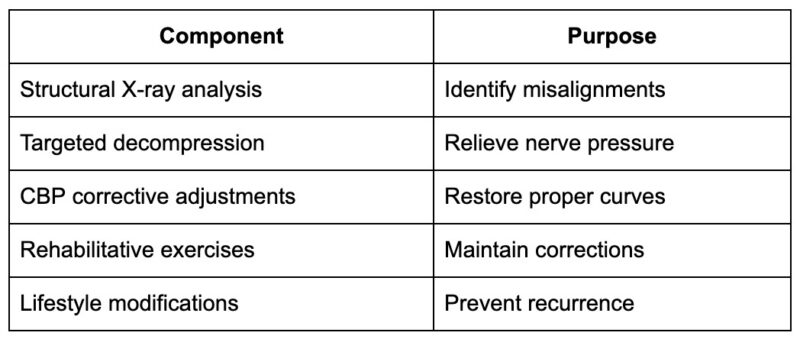
Am I a Candidate for Sciatica Decompression?
Signs Decompression Will Help
- Sharp, shooting pain radiating down one or both legs
- Numbness or tingling in leg, foot, or toes
- Weakness in leg muscles or difficulty lifting foot
- Pain worsening with sitting, bending, or coughing
- MRI showing disc herniation or bulge
Key factor: If your pain changes with position or movement, decompression can likely help.
Contraindications: When Decompression Is Not Advised
We don’t recommend decompression if you have:
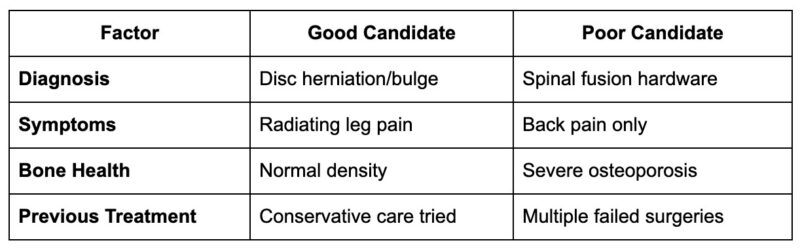
- Spinal hardware from previous fusion surgery
- Advanced osteoporosis or severe bone density loss
- Fractures or tumors in spine
- Pregnancy
- Severe obesity preventing proper positioning
- Certain vascular conditions
At our chiropractor New City, NY office, we’ll perform thorough examination and review imaging to determine if decompression is safe and appropriate.
Quick Candidate Assessment:
Schedule a Sciatic Nerve Evaluation
Still wondering does decompression help sciatica? The best answer comes through comprehensive evaluation.
We’ll assess your specific condition, review imaging, and determine whether decompression combined with structural correction is right for you.
At DeCarlo Chiropractic, every patient receives customized care based on their unique structural issues, symptom patterns, and healing goals. Our goal: correct the underlying problem so you stay out of pain.
Ready to explore non-surgical relief from sciatica? Contact DeCarlo Chiropractic today to schedule your sciatic nerve evaluation and structural assessment.
Frequently Asked Questions
How long does it take for sciatica to feel better with decompression?
Most patients notice improvement within 2-4 weeks. Significant relief typically occurs by 6-8 weeks. We recommend 20-30 sessions over 6-8 weeks initially.
Is the relief from spinal decompression permanent?
When combined with structural correction (CBP), results can be long-lasting. Maintaining proper alignment through periodic care and recommended exercises is essential. Without addressing structure, symptoms may return.